
Houston Outdoor Kitchens
- Thousands of satisfied customers
- Local and family owned
- 15+ years in business
- Licensed and insured
- Always FREE Quotes
Licensed & Reliable Built-in BBQ Grill Installation in Houston, TX
If you want a safer, cleaner, and better-looking backyard cooking space, professional Built-in BBQ Grill Installation Houston TX is the smart place to start. A built-in grill has to fit the island correctly, vent heat properly, and connect to gas and electrical systems the right way. Done wrong, it can lead to poor performance, smoke issues, or expensive rework.
At Houston Outdoor Kitchens, we design and install custom grill stations and full outdoor kitchens across Houston with licensed trade coordination, code-aware planning, and more than 15 years of hands-on experience. We handle gas line installation, grill cutouts, ventilation, cladding, countertops, and appliance start-up for projects in areas like Memorial, Katy, Bellaire, Cypress, and The Woodlands. Contact us today for a free estimate on your built-in grill project.
Why Professional Built-in Grill Installation Gives You Better Performance, Safer Cooking, and Less Stress
Most homeowners looking into a built-in grill are trying to solve more than one problem at once. You want a grill that looks integrated, cooks evenly, and works safely in Houston heat, humidity, and changing weather. Professional built-in BBQ grill installation helps you avoid guesswork and gives you a finished outdoor kitchen that performs the way it should from day one.
We build around the appliance, the fuel type, the patio layout, and the way you actually cook. That means proper clearances, the right ventilation, level countertops, and utility connections that support long-term use. You get a backyard feature that feels intentional instead of pieced together.
Safety First, With Less Risk to Your Home and Family
A built-in grill is not a drop-and-go appliance. Gas supply, heat output, ventilation, and proximity to combustible materials all need to be planned around manufacturer specs and recognized standards like NFPA 54 and NFPA 70. We coordinate proper gas line sizing, pressure testing, leak checks, and GFCI-protected electrical work where needed so you are not left wondering if something was skipped.
That matters even more when a grill is installed under a patio cover or pergola. In those cases, hood sizing, mounting height, and smoke control become critical. We also account for LP cylinder ventilation cutouts when propane is used, because propane is heavier than air and cannot be treated like natural gas.
Cleaner Fit, Better Cooking, and a Finished Look
You want the grill to sit correctly, open fully, and line up with your counters and doors. We build cutouts to the appliance specifications and handle grill replacement and retrofit work when an old opening does not match a new model. If needed, we can fabricate stainless trim solutions for odd-size openings rather than leaving visible gaps.
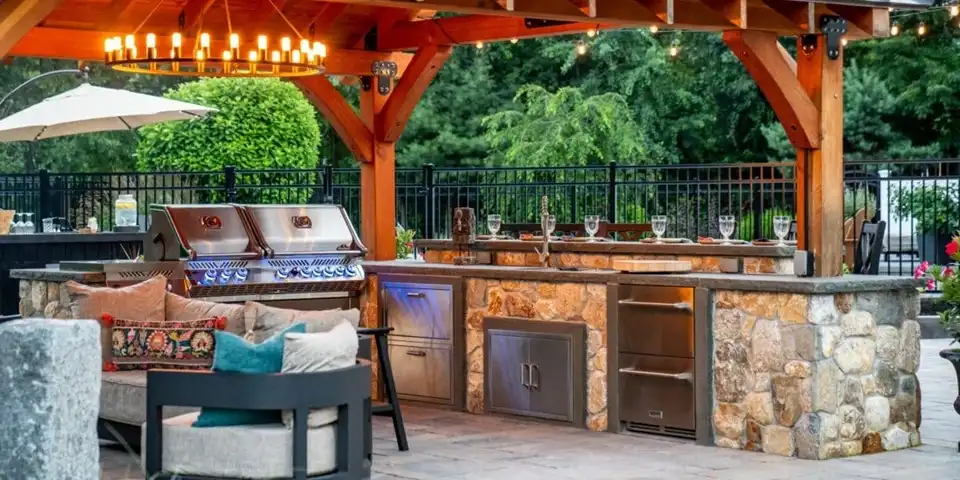
We also help you choose materials that hold up outdoors. Popular combinations include 304 stainless grills with stucco or stone-clad islands, plus granite or outdoor-rated quartzite counters. The result is a cooking area that looks custom, resists weather, and supports features like side burners, refrigeration, sinks, or a pizza oven.
Faster Project Completion Without Trial and Error
Trying to coordinate masonry, gas, electrical, countertop fabrication, and appliance hookup on your own can turn one project into five separate headaches. We streamline the process by planning layout, materials, utility routing, and finish details upfront. That keeps your schedule tighter and reduces the back-and-forth that often slows outdoor kitchen jobs.
You also avoid the learning curve that comes with hood CFM planning, cutout specs, valve access, drainage considerations, and service clearances. We already know what to look for before work begins, which helps prevent delays and mid-project changes.
Better Long-Term Value and Fewer Expensive Mistakes
Improper installation can shorten the life of your grill and surrounding finishes. A poorly placed gas shutoff, weak framing, missing heat shield, or unsealed stone surface can create issues that cost far more to fix later. We use proven methods such as non-combustible framing around the firebox, sediment traps where required, and expansion-aware countertop installation to reduce future problems.
For Houston homes, moisture control and drainage matter too. We plan for slope, runoff, and durable exterior materials so your investment holds up through summer storms, humidity, and regular use. That protects both appearance and performance.
Accountability, Warranty Support, and Real Peace of Mind
When you hire a professional installer, you are not left sorting out who is responsible if something does not fit or function correctly. We stand behind our work, coordinate start-up and orientation, and make sure you understand shutoffs, burners, ignition, and basic maintenance before we leave.
Our team serves thousands of customers across Greater Houston as a local, family-owned company. We work with licensed trade partners where required, carry insurance, and follow manufacturer installation manuals closely so your warranty support is not put at risk by avoidable installation errors.
How Our Built-in Grill Installation Process Works
We keep the process clear, organized, and easy to follow. From your first call to final start-up, we focus on communication, safe installation, and a finished space that fits your backyard and cooking style.
1. Consultation and Site Review
We discuss your goals, preferred grill brand, fuel type, and layout. Then we evaluate the patio, existing utilities, clearances, ventilation needs, and whether the project is a simple grill station or part of a larger outdoor kitchen.
2. Design, Appliance Selection, and Estimate
We recommend a layout and materials based on how you cook and entertain. This may include options for Blaze, Fire Magic, Lynx, Coyote, side burners, refrigeration, countertops, stone or stucco finishes, and vent hood sizing if the grill will be covered.
3. Utility Planning and Build Preparation
Before construction starts, we plan gas, electrical, drainage, and any slab or patio modifications. If permits or HOA approvals apply, we help guide that process so the project moves forward with fewer surprises.
4. Installation and Finish Work
We complete framing, cladding, countertop installation, appliance placement, and utility connections. During this stage, we verify cutout fit, level surfaces, ventilation openings, and access to valves, regulators, and service points.
5. Start-Up, Testing, and Walkthrough
We test the system, check for leaks, confirm ignition and burner performance, and review safe operation with you. You get a clean, ready-to-use grill station built for dependable outdoor cooking.
Why Choose Us for Built-in BBQ Grill Installation in Houston
At Houston Outdoor Kitchens, we focus on outdoor cooking spaces every day, not as a side service. That matters when your project includes gas connections, electrical planning, ventilation, masonry finishes, and appliance-specific fit requirements. Our team brings more than 15 years of experience, a local reputation built on thousands of customers served, and a practical understanding of what works in Houston backyards. When homeowners want Built-in BBQ Grill Installation Houston TX done the right way, we deliver a process that is organized, code-aware, and built around long-term performance.
We Build Around the Grill Brand and Manufacturer Requirements
Not every grill installs the same way. Cutout dimensions, ventilation needs, insulating liners, and clearance requirements vary by manufacturer and model. We work with premium built-in brands such as Lynx, Fire Magic, Blaze, Coyote, Hestan, Bull, and others, and we follow the installation manual instead of guessing in the field.
That is especially important when you are replacing an older unit. A new 36-inch or 42-inch grill may not match the existing opening exactly. We handle retrofit planning, cutout resizing, and trim solutions so the finished island looks intentional and performs properly.
Licensed Trade Coordination for Gas, Electrical, and Code-Sensitive Work
Outdoor kitchens often require more than finish carpentry or masonry. We coordinate with a Texas State Board of Plumbing Examiners licensed plumber for gas-related work when needed, and a TDLR-licensed electrical contractor or master electrician for dedicated circuits, lighting, ignition power, refrigeration, and GFCI protection.
We also plan around applicable City of Houston requirements, including ventilation permit considerations under HPWCODE1030 where a hood installation triggers it. For propane work, we account for LP-specific safety details and coordinate proper installation practices, including regulator access and ventilation cutouts low in the island enclosure.
Proven Tools, Testing Methods, and Safety Procedures
We do not rely on a visual check and call it good. Our installation process includes pressure testing, soap-bubble checks, and electronic leak verification using a gas leak detector. We use tools such as a digital manometer, multimeter, GFCI tester, masonry wet saw, SDS rotary hammer, conduit bender, and laser level to keep both utility work and finish work precise.
Those details affect your experience in real ways. Properly leveled appliances cook better. Correct gas pressure improves burner performance. A correctly sized hood, often planned around BTU load and depth, helps reduce smoke buildup and blowback under covered patios and pergolas.
Houston-Specific Experience With Climate, Layout, and Materials
We build for local conditions, not generic showroom conditions. In Houston, heat, humidity, wind, and heavy rain all influence material choice and layout. We recommend proven exterior materials like 304 stainless steel components, galvanized steel studs or CMU block, cement backer board, stone veneer, stucco, and sealed natural stone or granite suited for outdoor exposure.
For homes near pools or higher-moisture environments, we can also discuss when 316-grade components make sense. We routinely build in neighborhoods such as River Oaks, West University Place, Spring Branch, Tanglewood, Sugar Land, Pearland, Friendswood, Kingwood, Katy, and Cypress, so we understand the patio types, lot layouts, and HOA expectations common across the area.
Clear Communication, Local Accountability, and Support After the Install
Homeowners want more than a finished island. You want updates, realistic timelines, and a team that answers questions before and after the job. We explain the process clearly, help with appliance selection, and provide a final walkthrough so you know how to operate and maintain your outdoor kitchen safely.
Because we are local and family owned, our reputation stays tied to the work we complete in Greater Houston. We carry insurance, stand behind our craftsmanship, and make it easy to reach us if you need future upgrades, maintenance, or additional features like a sink, outdoor refrigerator, smoker, griddle, or power burner.
Built-in Grill Installations Backed by Real Houston Outdoor Kitchen Experience
We have completed projects ranging from compact grill stations to fully integrated outdoor kitchens throughout Greater Houston. Our experience with built-in BBQ grill installation helps homeowners make smart decisions about layout, materials, ventilation, and fuel connections before construction begins. Whether you need a simple island in Houston, a covered patio kitchen in Katy, or a retrofit in Sugar Land, we build with performance, serviceability, and long-term durability in mind. Every project is tailored to the home, the grill model, and how the space will actually be used.
Types of Grill Projects We Handle
Some homeowners want a straightforward grill station with counter space and storage. Others want an L-shaped or U-shaped outdoor kitchen with bar seating, refrigeration, a sink, side burners, or a pizza oven. We handle both ends of that range and help you match the scope to your budget and entertaining goals.
We also build under-pergola kitchens, covered patio cooking areas with vent hoods, poolside cabana kitchens, and grill plus smoker or kamado combinations. If you already have an island, we can retrofit it for a new built-in grill and update the surrounding finish work to create a cleaner fit.
Our Construction Methods and Installation Standards
We use durable exterior-ready construction methods such as CMU block or galvanized steel stud framing with cement backer board, followed by stone veneer, brick veneer, stucco, tile, or other approved finishes. Countertops are fabricated in materials like granite, quartzite, concrete, or other surfaces selected for outdoor use and maintenance expectations.
For gas and appliance setup, we focus on line sizing, shutoff access, sediment traps, pressure testing, and leak checks. We maintain clearances to combustibles per the manufacturer, use heat shielding where needed, and make sure appliances sit level with proper ventilation and service access panels for future maintenance.
Challenging Installations We Solve Regularly
Houston homes often present conditions that require extra planning. We frequently work around existing patio slabs, low rooflines, pergolas, limited access yards, and islands with outdated cutout dimensions. These are the jobs where experience matters most, because one wrong assumption can affect hood placement, utility routing, or appliance fit.
We also address smoke management for breezy patios, drainage planning near pool decks, and material selection for high-sun exposure. For homeowners comparing propane vs natural gas, we explain how each option affects convenience, ventilation details, and long-term fuel usage.
What You Can Expect From the Finished Result
Your completed grill installation should look custom, operate smoothly, and be easy to maintain. Doors should align, countertops should slope properly for drainage without feeling off-level, and the grill should light, heat, and vent as intended. We also review cleaning, maintenance, and start-up basics so you can use the space confidently.
Many of our clients begin with a grill island and later add features such as lighting, refrigeration, a fire feature, or more prep space. Because we plan carefully from the start, your outdoor kitchen can grow without feeling like an afterthought.
Other Services We Offer
- Custom Outdoor Kitchen Installation
- Outdoor Kitchen Design Services
- Covered Outdoor Kitchen Builder
- Outdoor Kitchen with Pergola Installation
- Poolside Outdoor Kitchen Installation
- Backyard Outdoor Kitchen Installation
- Small Outdoor Kitchen Installation
- Luxury Outdoor Kitchen Installation
- Modern Outdoor Kitchen Installation
- Rustic Outdoor Kitchen Installation
- L-Shaped Outdoor Kitchen Installation
- Stone Veneer Outdoor Kitchen Installation
- Brick Outdoor Kitchen Installation
- Stucco Outdoor Kitchen Installation
- Granite Outdoor Kitchen Countertop Installation
- Outdoor Kitchen Cabinet Installation
- Stainless Steel Outdoor Kitchen Installation
- Quartzite Outdoor Kitchen Countertop Installation
- Built-in BBQ Grill Installation
- Outdoor Kitchen with Gas Grill Installation
- Outdoor Kitchen with Smoker Installation
- Outdoor Kitchen with Flat Top Grill Installation
- Outdoor Pizza Oven Installation
- Outdoor Kitchen Refrigerator Installation
- Outdoor Kitchen with TV Installation
- Outdoor Kitchen Storage Solutions Installation
- Blaze Built-in BBQ Grill Installation
- RCS Built-in BBQ Grill Installation
- Kamado Joe Built-in BBQ Grill Installation
- FireMagic Built-in BBQ Grill Installation
- Bull Built-in BBQ Grill Installation
- Lynx Built-in BBQ Grill Installation
- Outdoor Kitchen with Bar Builder
- Custom Outdoor Bar Installation
- Outdoor Kitchen with Sink Installation
- Outdoor Kitchen with Ice Maker Installation
- Outdoor Kitchen Lighting Installation
- Outdoor Kitchen Seating Area Installation
- Patio Cover Installation
- Pergola Installation
- Swiming Pool Installation
- Outdoor Fireplace Installation
- Fire Pit Installation
- Paver Patio Installation
- Patio Extension Builder
- Deck Installation
- Luxury Backyard Living Space Design
- Outdoor Living Contractor
- Detached Outdoor Kitchen Structure Builder
- Outdoor Kitchen Remodeling
- Outdoor Kitchen Renovation
- Outdoor Kitchen Gas Line Installation
- Outdoor Kitchen Electrical Installation
Locations We Serve
- Houston
- Pasadena
- Pearland
- The Woodlands
- League City
- Sugar Land
- Baytown
- Atascocita
- Conroe
- Missouri City
- Kingwood
- Spring
- Texas City
- Cypress
- Channelview
- Friendswood
- Mission Bend
- Deer Park
- Alvin
- Fresno
- Cloverleaf
- Katy
- Dickinson
- Cinco Ranch
- Stafford
- Bellaire
- Manvel
- La Marque
- Humble
- Pecan Grove
- South Houston
- West University Place
- New Territory
- Seabrook
- Sienna Plantation
- Santa Fe
- Richmond
- Greatwood
- Four Corners
- Tomball
- Webster
- Galena Park
- Jacinto City
- Rosenberg
- La Porte
- Fulshear
- Mont Belvieu
- Harris County
- Fort Bend County
- Montgomery County
- Brazoria County
- Galveston County
- Liberty County
- Waller County
- Chambers County
Frequently Asked Questions
Do I need a permit for an outdoor kitchen or built-in grill in Houston?
Sometimes, yes. Permit requirements depend on the scope of work, especially when gas lines, electrical circuits, ventilation hoods, or structural changes are involved. In Houston, hood and ventilation work may trigger City of Houston Outdoor Kitchen mechanical permit requirements, and gas or electrical work may require licensed trade involvement and inspection. We help homeowners understand what applies to their specific project and can guide the permitting process so work starts on the right footing.
How much does it cost to install a built-in grill in Houston, TX?
The investment can vary widely based on the grill brand, island size, finish materials, utility work, and whether you are adding features like refrigeration, a sink, side burner, or vent hood. A basic grill station costs far less than a full masonry outdoor kitchen with countertops and multiple appliances. During your estimate, we break down the scope clearly so you understand where the budget goes and which upgrades add the most long-term value.
Can any grill be built in, or do I need a specific built-in model?
You generally need a grill specifically rated and designed for built-in use. Freestanding grills are not automatically safe to enclose in masonry or cabinetry because airflow, heat dissipation, and clearance requirements differ. Built-in models are manufactured with installation specs for cutout size, ventilation, and combustible clearances. We review the appliance manual before construction so the grill island is built around the correct model instead of trying to force a poor fit later.
Do built-in grills need ventilation or a range hood?
Every built-in grill needs proper ventilation in the island enclosure, and some setups also need a hood above the cooking surface. If the grill is installed under a patio cover, pergola, or roof structure, a vent hood is often the safest and most practical solution for smoke and heat control. Hood sizing depends on grill width, BTU output, and installation location. We plan both lower enclosure ventilation and overhead exhaust based on the appliance and the site conditions.
Is it safe to put a grill under a covered patio?
It can be safe when the layout, appliance clearances, ventilation, hood capacity, and surrounding materials are planned correctly. Covered installations need more attention than open-air grill stations because smoke, heat, and grease vapor can collect under the structure. We check manufacturer requirements, hood placement, and non-combustible protection details before recommending the design. If a covered layout is not ideal for your space, we will tell you that upfront rather than force a risky installation.
Can you convert a built-in grill from propane to natural gas?
Sometimes, but only if the grill manufacturer allows that conversion and provides the correct kit or procedure. Not every built-in model is field-convertible, and using the wrong parts can affect safety, performance, and warranty coverage. We verify the brand, model, regulator, orifices, and fuel specifications before recommending an LP-to-NG or NG-to-LP conversion. If conversion is not approved, we can help you choose a replacement unit that matches your island and fuel source.
Do I need GFCI outlets for my outdoor kitchen?
In most cases, yes. Outdoor receptacles typically require GFCI protection under current electrical standards, and that is especially important around cooking areas, sinks, refrigerators, and weather exposure. If your project includes ignition power, lighting, convenience outlets, or vent hood wiring, we coordinate outdoor-rated electrical work with the right protection and weatherproof covers. We also consider dedicated circuits where needed so appliances operate reliably instead of overloading a shared line.
How long does a built-in grill or outdoor kitchen installation take?
Timeline depends on complexity. A simple built-in grill setup may move much faster than a larger outdoor kitchen with gas, electrical, countertops, cladding, and permit coordination. Material lead times also matter, especially for specialty grills, custom stone, or fabricated counters. After the site visit, we provide a realistic schedule based on your actual scope. Our goal is to keep the job moving in a logical order so you are not waiting on avoidable delays.
Which brands of built-in grills do you install?
We install many of the premium brands homeowners request for outdoor kitchens, including Blaze, Fire Magic, Lynx, Coyote, Bull, Hestan, and other built-in models with proper manufacturer documentation. The best choice depends on your cooking style, available fuel type, desired burner configuration, and long-term maintenance expectations. We help you compare options like 304 stainless construction, infrared sear burners, rotisserie features, and accessory compatibility before finalizing the plan.
How do I replace a built-in grill when the new cutout size does not match my existing island?
That is a common retrofit issue, especially with older BBQ islands. A new grill may be slightly wider, deeper, or shaped differently than the previous unit, and guessing can damage countertops or leave unattractive gaps. We measure the existing opening, review the new manufacturer cutout specs, and recommend the best solution, whether that means resizing the opening, modifying the surround, or fabricating trim. The goal is a safe fit that still looks clean and intentional.